
Affiliate disclosure: This guide includes affiliate links. If you purchase through these links, we may earn a commission at no extra cost to you.
Jump to Product Sections
Managing water on a sloped yard requires a system that can handle high-velocity runoff while preventing groundwater saturation. The ideal setup depends on the severity of your incline, your soil type (clay vs. sandy), and whether you are protecting a foundation or stopping lawn erosion. Prioritizing high-capacity pipes and debris-filtering basins ensures the system remains functional during heavy seasonal storms.
Corrugated Drain Pipe – Best for flexible routing around landscaping and steep inclines.
Catch Basin with Grate – Best for collecting pooling water at the base of a hill.
Channel Drain – Best for intercepting sheet flow across driveways or patios.
Non-Woven Geotextile Fabric – Best for lining French drains to prevent soil clogging.
Sump Pump Basin – Best for low spots where gravity cannot move water to a discharge point.
What to Consider Before Buying
Pipe Diameter and Flexibility Most residential systems utilize 4-inch piping, which handles standard rainfall. On steep slopes, corrugated piping is often superior to rigid PVC because it snakes around tree roots and terrain without requiring multiple elbow joints. Ensure the pipe is rated for burial depth if it will be positioned under a driveway or heavy stone feature.
Flow Capacity and Grate Design For surface collection, the grate size must match the expected water volume to prevent "bypass," where water flows over the drain rather than into it. High-slope areas require basins with wider grates or multiple entry points.
- Check load ratings (Class B is standard for light vehicle traffic).
- Match grate width to the intensity of the slope's runoff.
- Ensure the grate is removable for easy debris clearing.
Soil Composition and Filtration Clay-heavy soil moves water slowly and carries fine sediment that can choke a system. You must use a combination of gravel and non-woven geotextile fabric to act as a primary filter.
- Use a "burrito wrap" technique around pipes.
- Avoid woven fabrics, which clog easily in clay.
- Select clean, 1-inch crushed stone for maximum void space.
Discharge Point and Local Codes Identify where the water will ultimately go, as many municipalities prohibit directing runoff onto neighboring properties or into street sewers.
- Install a pop-up emitter to distribute water safely on lower lawns.
- Verify a "slope-to-fall" ratio of at least 1 inch of drop per 10 feet.
- Consult local building codes regarding "dry wells" or "bubbler" pots.
Detailed Breakdown of Each Option
Corrugated Drain Pipe
This flexible piping serves as the backbone for most sloped-yard French drains, expanding and bending to follow natural landscape contours. It is the practical choice for uneven terrain where rigid pipes would require expensive fittings and precise, difficult trenching. While smooth-wall pipes are easier to snake, corrugated options offer significantly faster installation. If your goal is to collect groundwater rather than just transport surface water, verify that the pipe has slit perforations.
Recommended Products

Black Drain Pipe
$24.90
Best for: Best for standard spaces setups that need corrugated drain pipe at a practical budget without overbuying.
When to choose: Go with this if you want a working setup this week and still keep spend controlled.

Down Spout Drain Extension Extendable from 22"
$25.90
Best for: Best for readers focused on practical setups who need dependable corrugated drain pipe without paying for overkill.
When to choose: Pick this if this step is a real workflow bottleneck and you want the lowest decision risk.
Catch Basin with Grate
Catch basins serve as the primary collection point for surface runoff rushing down a slope toward a foundation. These are essential for "low spots" where water naturally pools during heavy downpours. High-impact plastic basins are preferred for DIY projects because they are easier to install than concrete and won't crack during freeze-thaw cycles. For sloped yards, a 12×12 inch basin is the recommended minimum to prevent debris from immediately overwhelming the grate.
Recommended Products

Detachable Basin
$120.90
Best for: Best for standard spaces setups that need catch basin at a practical budget without overbuying.
When to choose: Go with this if you want a working setup this week and still keep spend controlled.
Channel Drain
Channel drains are long, narrow systems designed to intercept "sheet flow" before it crosses flat surfaces like patios or driveways at the base of a hill. These are highly effective for protecting garage entries where water velocity is high. While more expensive than standard round drains, they offer superior protection for hardscaping. Note that end caps and outlet pieces are often sold separately but are required to connect the channel to your main discharge line.
Recommended Products
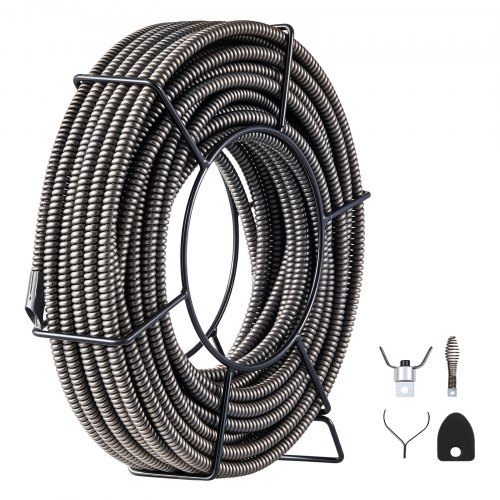
Drain Cleaning Cable 75 Feet x 1/2 Inch
$76.90
Best for: Best for lighter-use setups where channel drain should work now and stay affordable.
When to choose: Choose this if budget is your main constraint and this step is a real workflow bottleneck.
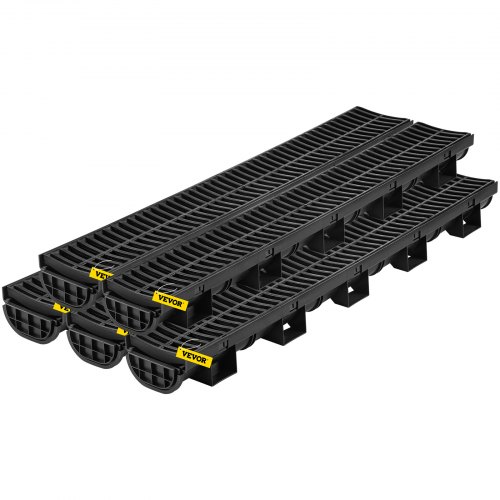
Channel Drain with Plastic Grate (5.7×3.1, 5×39)
$81.90
Best for: Best for steady weekly use where balanced cost and reliability matter for channel drain.
When to choose: Go with this when your target is reliable steady weekly use at a balanced price point.
Non-Woven Geotextile Fabric
This fabric is the most critical component for any sub-surface drainage system on a slope. It lines the trench in silty or sandy soil to prevent fine particles from clogging the gravel and pipe. While it slightly slows initial infiltration, it extends the system's lifespan by decades by keeping the drainage stone clean. Avoid using woven "weed barrier" fabric, as it lacks the flow rate necessary for drainage and can cause water to back up.
Recommended Products

Geotextile Fabric (3.5oz, 600lb)
$25.90
Best for: Best for lighter-use setups where geotextile fabric should work now and stay affordable.
When to choose: Choose this if budget is your main constraint and this step is a real workflow bottleneck.

Non Woven Geotextile Fabric Under Gravel (6×100, 8OZ)
$72.90
Best for: Best for readers focused on practical setups who need dependable geotextile fabric without paying for overkill.
When to choose: Pick this if this step is a real workflow bottleneck and you want the lowest decision risk.
Sump Pump Basin
In yards where the slope ends in a "bowl" with no lower exit point, a sump pump basin is required to lift water to a higher discharge area. This is the go-to solution for severe drainage issues where gravity-fed systems are physically impossible. This mechanical solution requires electricity and routine maintenance. Always install a check valve on the discharge line to prevent water from flowing back into the basin once the pump cycles off.
Recommended Products

Under-Sink Sump Pump System with 6 Gallon Basin
$165.90
Best for: Best for standard spaces setups that need sump pump basin at a practical budget without overbuying.
When to choose: Go with this if you want a working setup this week and still keep spend controlled.
Which One Should You Choose?
A French Drain System using corrugated pipe is the best choice for managing groundwater and preventing soil saturation on large, grassy slopes. If your primary issue is surface water rushing toward a structure or across a driveway, a Catch Basin or Channel Drain is more effective. For yards with no natural exit point, a Sump Pump Basin is necessary to move water uphill to a street or dry well. Before beginning any excavation, call 811 to mark underground utility lines, as most drainage trenches require a depth of 12 to 18 inches.